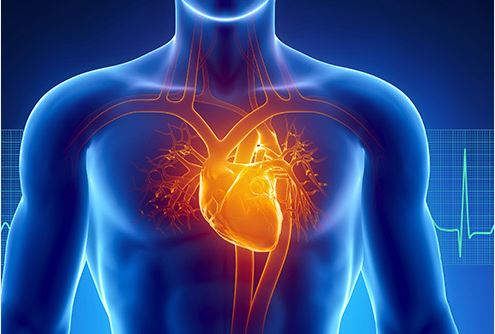
For a maturing populace, for example, that found in America, ceaseless infections like a malignant growth, diabetes, and coronary illness cause significant damage. While these ailments probably won’t collect the features granted to intense executioners like the most recent influenza episode or a fascinating tropical malady, the Centers for Disease Control and Prevention reports that around 610,000 individuals pass on of coronary illness in the United States each year. That records for around 25 percent of every single American passing, making coronary illness the No. 1 enemy of the two people in the U.S. today.
Use Gutamin 7 for a good health.
Term
The expression “coronary illness” is an umbrella term that alludes to various maladies and conditions that contrarily sway the cardiovascular framework, which controls the progression of blood all through the body. A portion of these particular conditions include:
Coronary corridor infection – a malady of the veins. Besides the heart surrenders a few people are brought into the world with, most instances of coronary illness are identified with the development of plaque in the veins – the veins that convey oxygen-rich blood around the body. This condition, known as atherosclerosis, is otherwise called solidifying of the conduits. The National Heart, Lung and Blood Institute reports this risky plaque is “made up of fat, cholesterol, calcium, and different substances found in the blood.” The American Heart Association site compares this development to a pipes issue. “Consider slop shaping within pipes. That is not an ideal examination since developments don’t simply shape on vein dividers however inside them. In any case, you get the thought.” Over time, plaque solidifies and limits your supply routes. This restrains the progression of blood to your organs and different pieces of your body. Eventually, this narrowing of the ways can prompt a respiratory failure, stroke or even demise.
Hypertension – hypertension. Regularly called the “quiet executioner” since it is the wellspring of such a large number of medical issues and may not offer numerous indications of its essence, hypertension powers your heart to work a lot harder than it ought to move blood through the body. After some time, this weight can cause respiratory failures or a debilitating or expansion of the heart muscle.
Congestive cardiovascular breakdown – a dynamic ailment where the heart muscle doesn’t siphon blood just as it ought to and in the long run flops out and out. Cardiovascular breakdown influences around 6 million individuals in the U.S. Dr. Ayehsa Hasan restorative chief of the cardiovascular transplant program and executive of the cardiovascular breakdown gadgets facility at The Ohio State University Wexner Medical Center says cardiovascular breakdown can take a couple of various structures, contingent upon how the heart battles to siphon blood. “With systolic cardiovascular breakdown, the siphoning capacity or the crush of the heart is debilitated.” The systolic capacity is the beat of the heart – the crush period of the siphon that is spoken to by the top number of a circulatory strain perusing. The cardiovascular breakdown can likewise be the consequence of “an unwinding issue,” during the diastolic stage, or the snapshot of rest between siphons of the heart. Diastolic weight is spoken to as the base number in a circulatory strain perusing.
Arrhythmias – unpredictable heart rhythms like atrial fibrillation. These issues can take various structures and happen when the electrical activity that controls your pulse is upset. This can be brought about by an irregularity of hormones, a respiratory failure, harm to the heart tissue from a past coronary episode, augmentation of the heart, blocked corridors, hypertension, smoking, prescriptions, medicate misuse, stress, rest apnea, diabetes, and auxiliary issues in the heart.
Inherent heart abandons – hereditary issues that outcome in flawed valves, gaps in the heart and other basic issues that affect the heart’s capacity to siphon blood through the body. These imperfections are generally discovered early – at times even before a child is conceived – yet a few people are grown-ups before a basic distortion gets known.
Signs and Symptoms
A few people with the coronary illness have no signs or side effects. Frequently, the main sign is a cardiovascular failure or stroke. Be that as it may, and still, at the end of the day, a few people despite everything don’t realize they’ve had a coronary episode. A May 2016 investigation in the diary Circulation found that in excess of 45 percent of all cardiovascular failures are “quiet,” which means the indications were so unobtrusive, the individual doesn’t have any acquaintance with it occurred. In any case, a quiet cardiovascular failure is as yet a coronary episode, says Dr. Evelina Grayver, executive of the coronary consideration unit at North Shore University Hospital in Manhasset, New York. “As a basic consideration cardiologist, to me, quiet cardiovascular failures are really more frightening, since when individuals have indications, they know to look for care immediately.”
Any coronary failure, including the one you probably won’t realize you had, can dispense harm on the heart in light of the fact that the progression of blood is obstructed to the muscle tissue, possibly keeping it from oxygen. Harm supported during a cardiovascular failure might be troublesome or difficult to fix later, so it’s essential to remain mindful of your wellbeing and converse with your primary care physician about any changes. “The most significant thing an individual can do is to know yourself and comprehend chance components,” says Dr. Ali Rahimi, a cardiologist with Kaiser Permanente Atlanta. “Never let an indication get old. In the case of something is unique, telling your primary care physician. In the event that you used to have the option to go here and their stairs effectively and now you can’t, let your primary care physician know. In the event that you have new brevity of breath or chest torment with effort, you should tell your PCP.”
Other early admonition signs that may appear in routine tests your PCP ought to proceed as a feature of your yearly physical incorporate raised degrees of cholesterol and triglycerides (building squares of fat) in the blood and hypertension. Sometimes, individuals with coronary illness may encounter agony or weight in the chest and brevity of breath. Others may feel uncommonly exhausted or experience issues dozing.
On account of respiratory failure, jaw torment, upper back torment, torment in the left arm, the unexpected beginning of perspiring, uneasiness, and sickness or heartburn are basic side effects. Numerous patients who’ve had a coronary episode report feeling like there’s an elephant on their chest – a profound weight, crushing, or totality and a failure to slow down. In the event that these indications last only a couple of moments, it’s likely not a respiratory failure. Be that as it may, in the event that they last longer than a couple of moments, you should look for crisis care. The faster you can find support, the less harm the respiratory failure will do to your heart muscle and the more benefits you’ll be over the long haul.
These side effects should be looked at by your PCP or a cardiologist.
Hazard Factors
The NHLBI reports the specific reason for atherosclerosis isn’t known, yet “certain attributes, conditions or propensities may raise your hazard for the ailment.” These hazard factors include:
An inactive way of life and an absence of physical movement.
- Smoking.
- Being overweight.
- Eating an unfortunate eating regimen.
- Family ancestry of coronary illness.
- Age.
“I would state smoking, hypertension and the diabetes plague have been the greatest wellsprings of increments in coronary illness that we’ve found in ongoing decades,” Goldberg says.
Conclusion
The primary thing that happens whenever you visit a specialist – having your circulatory strain estimation taken – is a simple, progressing approach to screen your cardiovascular wellbeing. A raised circulatory strain perusing can mean various things, yet on the off chance that your primary care physician speculates coronary illness, that will frequently be caught up with blood work to check your cholesterol and triglyceride levels and potentially a chest X-beam. Your primary care physician will likewise likely play out a physical test and get some information about your own and family restorative history before doing extra tests.
As indicated by the Mayo Clinic, contingent upon the particular condition you’re associated with having, you may experience at least one of these extra tests:
Electrocardiogram. An ECG records electrical signs that show abnormalities in your heart’s musicality and structure. This can be performed while you’re resting or during exercise, which is known as a pressure electrocardiogram.
Holter checking. The Holter screen is a convenient gadget that consistently records your heart’s electrical movement, as a rule for 24 to 72 hours, to distinguish heart musicality issues that probably won’t appear during a shorter ECG.
Echocardiogram. An echocardiogram is an ultrasound of the chest that gives your primary care physician an itemized image of your heart’s structure and capacity.
Stress test. During a pressure test, once in a while likewise called a treadmill test or an activity test, your PCP will hoist your pulse with exercise or drug and watch what occurs with imaging and other demonstrative gadgets.
Heart catheterization. Utilizing X-beam pictures, your PCP strings a catheter through a vein in your crotch or arm and into your heart where the catheter estimates pressure in the heart chamber. Your PCP may likewise infuse a color that appears on X-beam to perceive how blood courses through the heart and veins.
Heart modernized tomography sweep or CT check. With this test, your PCP utilizes CT pictures made by X-beams to get a decent take a gander at your heart and chest.
Cardiovascular attractive reverberation imaging, or MRI. Like CT filtering, right now, the MRI machine utilizes magnets to make a point by point pictures of your heart and chest.
Treatment
Contingent upon the particular coronary illness you have, your PCP may suggest a few methods for treating your disease. Boss among them are drugs and careful mediations.
Drugs:
Headache medicine or different anticoagulants. These medications forestall blood clumps and can help keep things moving in your supply routes and veins.
Beta-blockers. These medications lower circulatory strain and can be valuable for treating arrhythmias, angina (chest torment) and forestalling future coronary episodes.
Statins. These medications bring down your cholesterol levels to forestall plaque development in the supply routes. Diuretics. Otherwise called water pills, these prescriptions help the body free itself of overabundance liquids, which cuts down circulatory strain and decreases.
 The Adviser